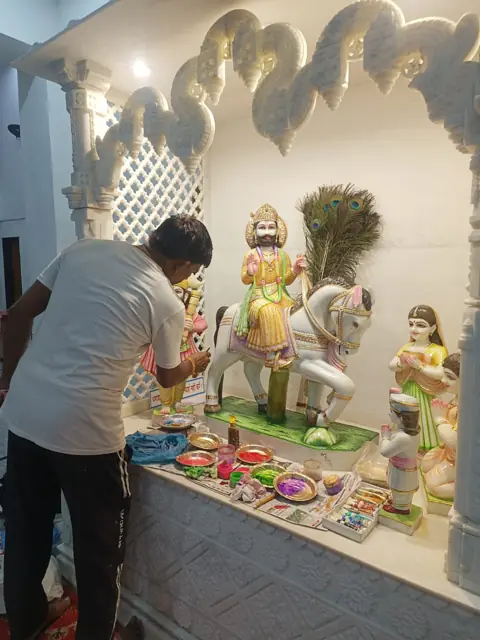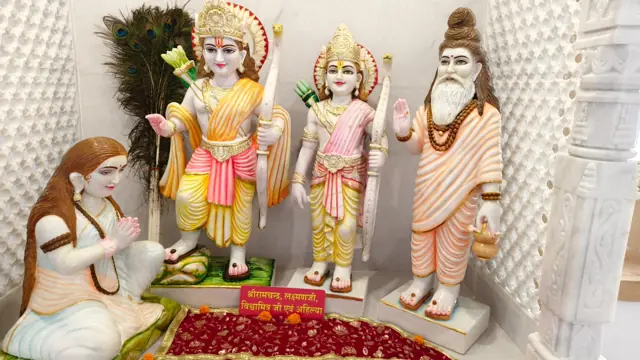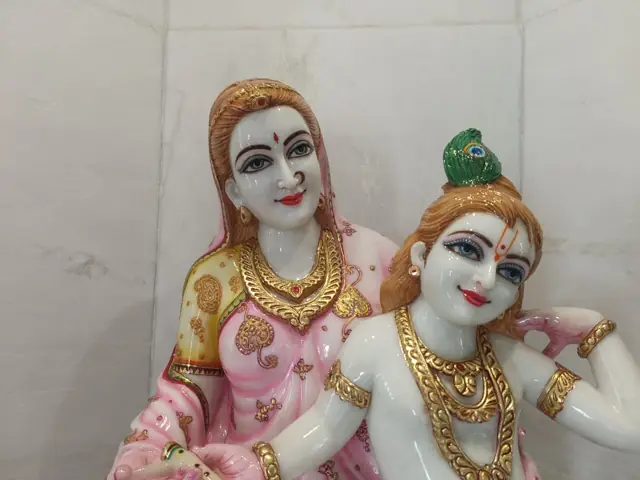
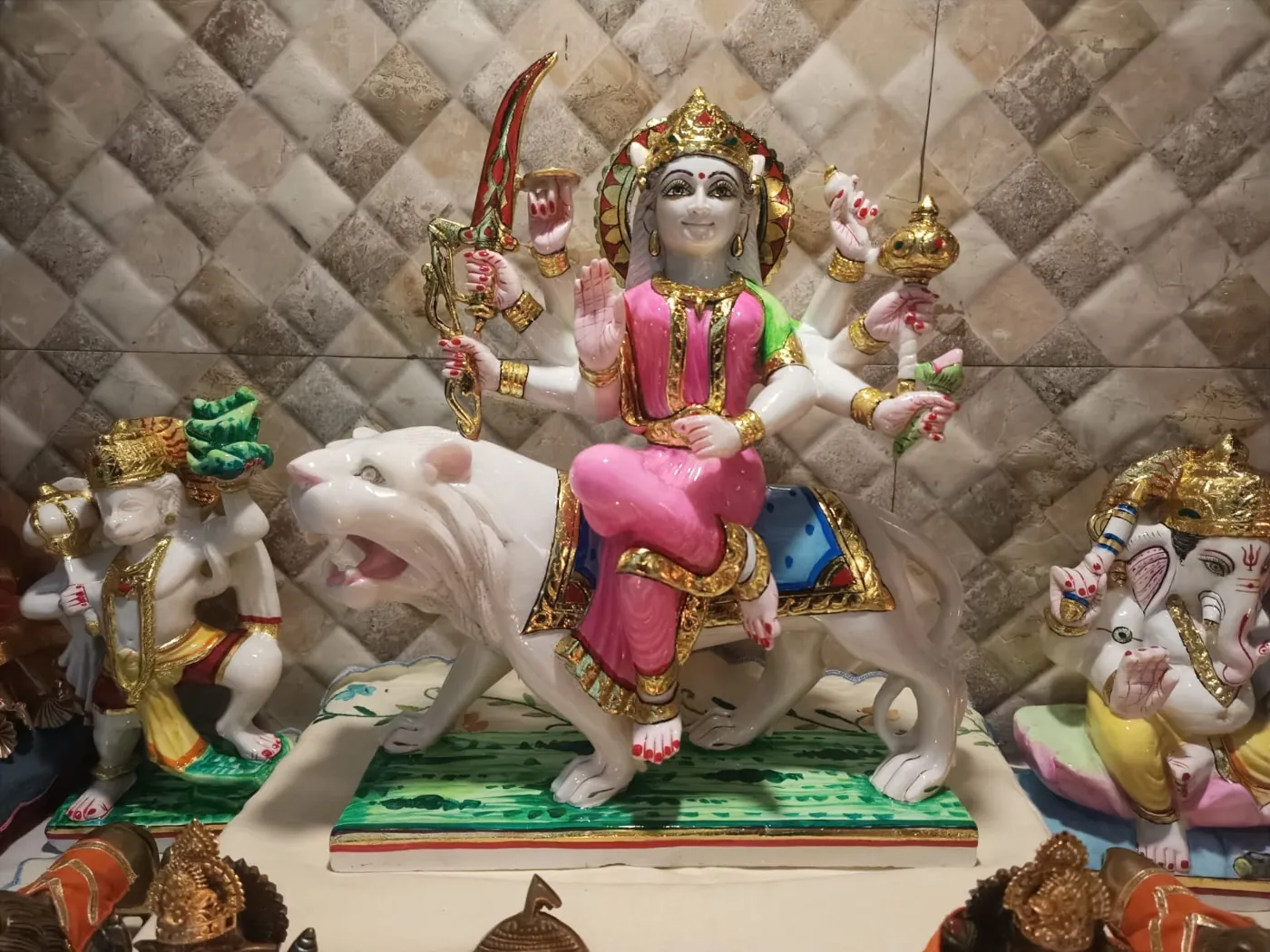
Old, faded or chipped paint does not mean a murti has lost its beauty. A careful murti repainting process can bring back colour and detailing while respecting the original form. Here is how professional repainting is usually done.
Signs Your Murti Needs Repainting
- Faded or uneven colour
- Chipped or peeling paint
- Dull polish and dark stains
- Worn eyes, borders or ornament detailing
Step 1: Inspection
The artisan checks the material, the existing paint, cracks and surface damage, and decides what restoration is needed.
Step 2: Cleaning and Preparation
Dust, oil and loose paint are removed so that new colour can hold properly. Minor cracks and chips are repaired.
Step 3: Base Colour
A base layer is applied and allowed to dry before the main colours are built up. Drying time between layers is why good repainting cannot be rushed.
Step 4: Fine Detailing
Face, eyes, clothing, ornaments and decorative patterns are hand-finished with focused attention because these define the expression of the murti.
Step 5: Shringar
If selected, gold, warak or decorative elements are added to give a richer ceremonial look. Learn more in our murti shringar guide.
Step 6: Final Inspection
The finished murti is checked, cleaned and prepared for handover or delivery. We offer home service across Delhi NCR for selected work, or we can work at our workshop.
Explore our murti painting service or share photos for an estimate.
Get Repainting EstimateGet a Free Murti Painting Estimate
Frequently Asked Questions
How long does murti repainting take?
It depends on size, condition and detailing. Layers need drying time between coats, so good repainting is not rushed. We give a timeline after seeing photos.
Can chipped paint be repaired?
Yes. Loose paint is removed, minor chips are repaired and the surface is prepared before new colour is applied.